Apps for Nobody
To start, an obvious truth: I know that I am more happy, creative, and productive when I’m consistently practicing the habits that keep me mentally and physically healthy. The catch is that simply doing things doesn't feel complete until they exist in both my biological brain and my digital brain. I need my phone to cosign my own life, which is perhaps a sadder, less obvious truth.
There are hundreds if not thousands of apps for productivity: habit trackers, to-dos lists, etc. They’re so ubiquitous that they’re often the first type of app you make when you’re learning how to make apps. What really irks me, though, is that among the glut of options available (and among the apps specifically design to build and track habits) they all come with a cost, a subscription. That’s ridiculous. So I figured I’d make my own—for me.
This will be less about the step-by-step process of vibe coding apps from start to finish and more about lessons learned and insights gained.
A clear path gives more energy than it takes
For the past 15 years of my life, at any given moment I likely had some moonshot side project idea that I would be obsessing over. A community crossword app, a video game about being a bug, a research bot that shows what other people’s TikTok is like. The hurdle has always been that I am a very bad engineer. This meant that in order to realize my ideas, I’d always be trying to learn a new language in parallel. I’d have enough excitement about the idea to fuel language learning for a few weeks or months, but always would eventually flame out.
In retrospect, the problem is clear: I was spending just as much energy on the mechanics of coding concepts as I was on the concepts themselves. It was double work and it was exhausting.
Of course, this is where generative AI comes in.
No longer would I have to think about any of that. Or at least, I got to pick and choose where I wanted to invest technical energy. The split of thinking was no longer a split, and energy-wise, the project started sustaining itself — fewer hangups, fewer roadblocks, ideas building on ideas, the flame was growing and I was throwing the logs on.
Vibe coding isn’t vibing
Perhaps it’s passé (or perhaps even irresponsible), but I’ve fallen in love with using GenAI to realize my ideas. I’m making tools for myself, I can afford to take responsibility for my mistakes.
What has truly stood out to me beyond having more energy is having more space and time for ideas. When the technical implementation stops being a puzzle, I can focus on the harder questions.
The flow usually goes like this:
- Prompt the AI
- While it’s churning: ruminate, play, strategize
- When it’s done: test, validate, revise
- Combine outputs from 2 and 3 and return to 1.
For me, this is a revelation.
Space to think leads to new ideas
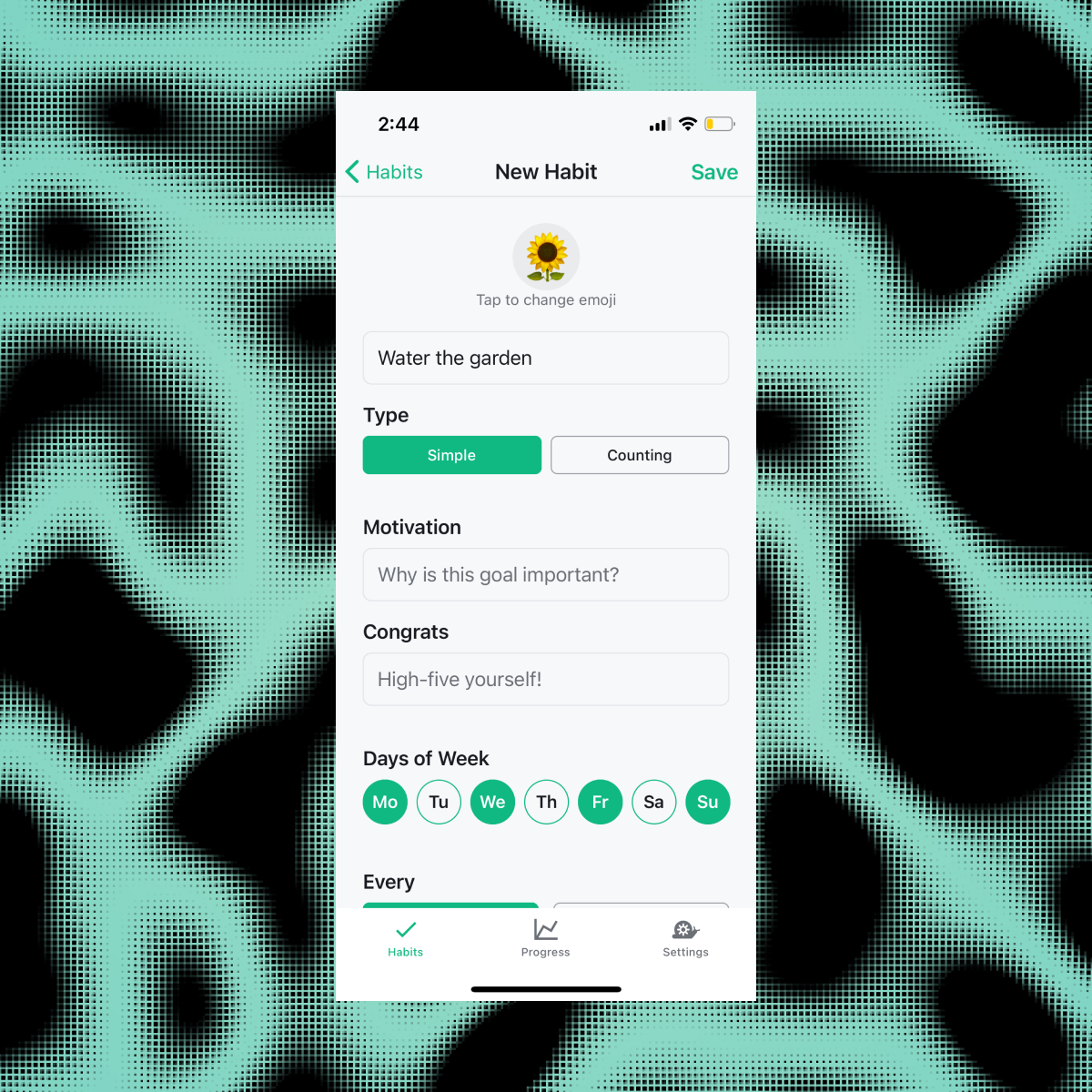
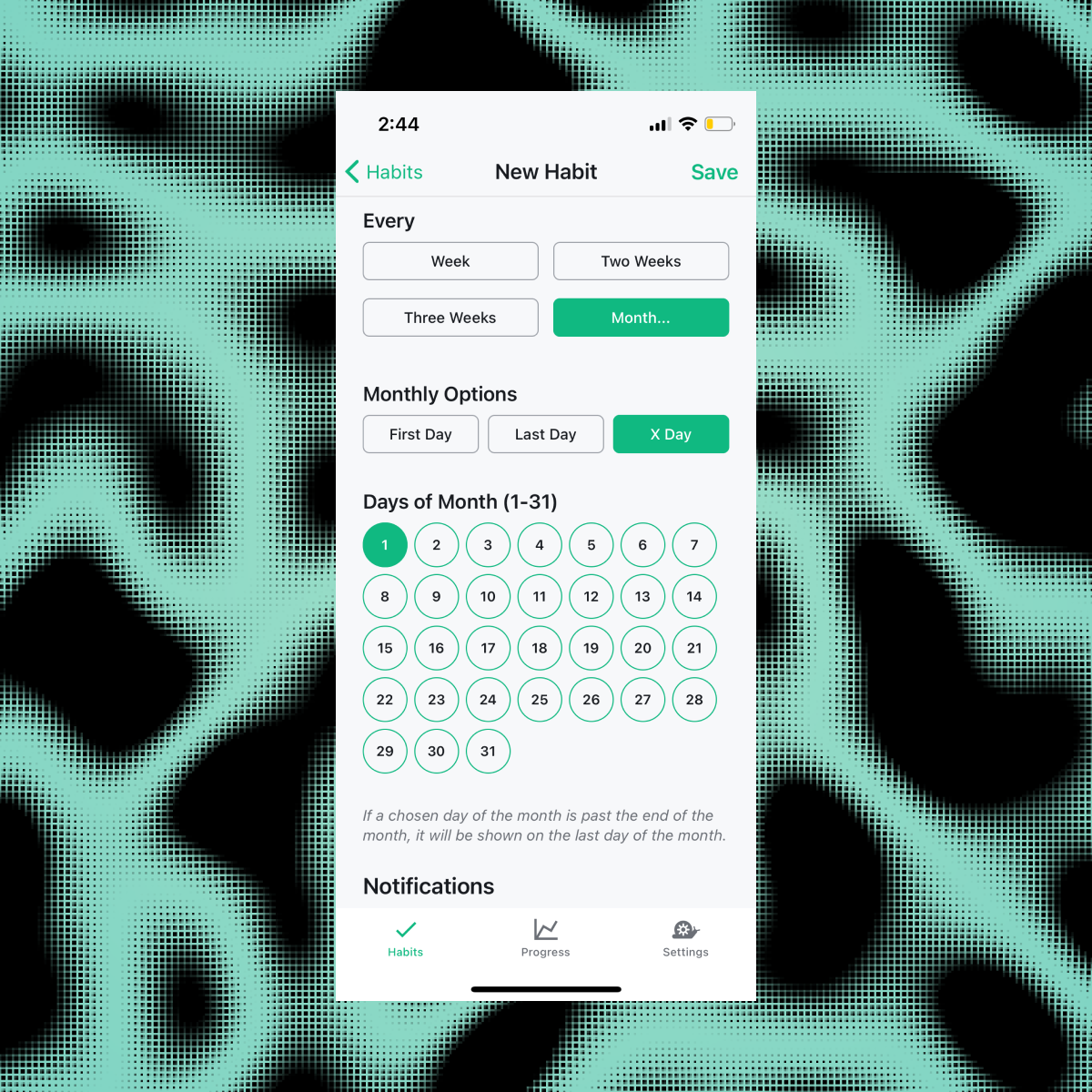
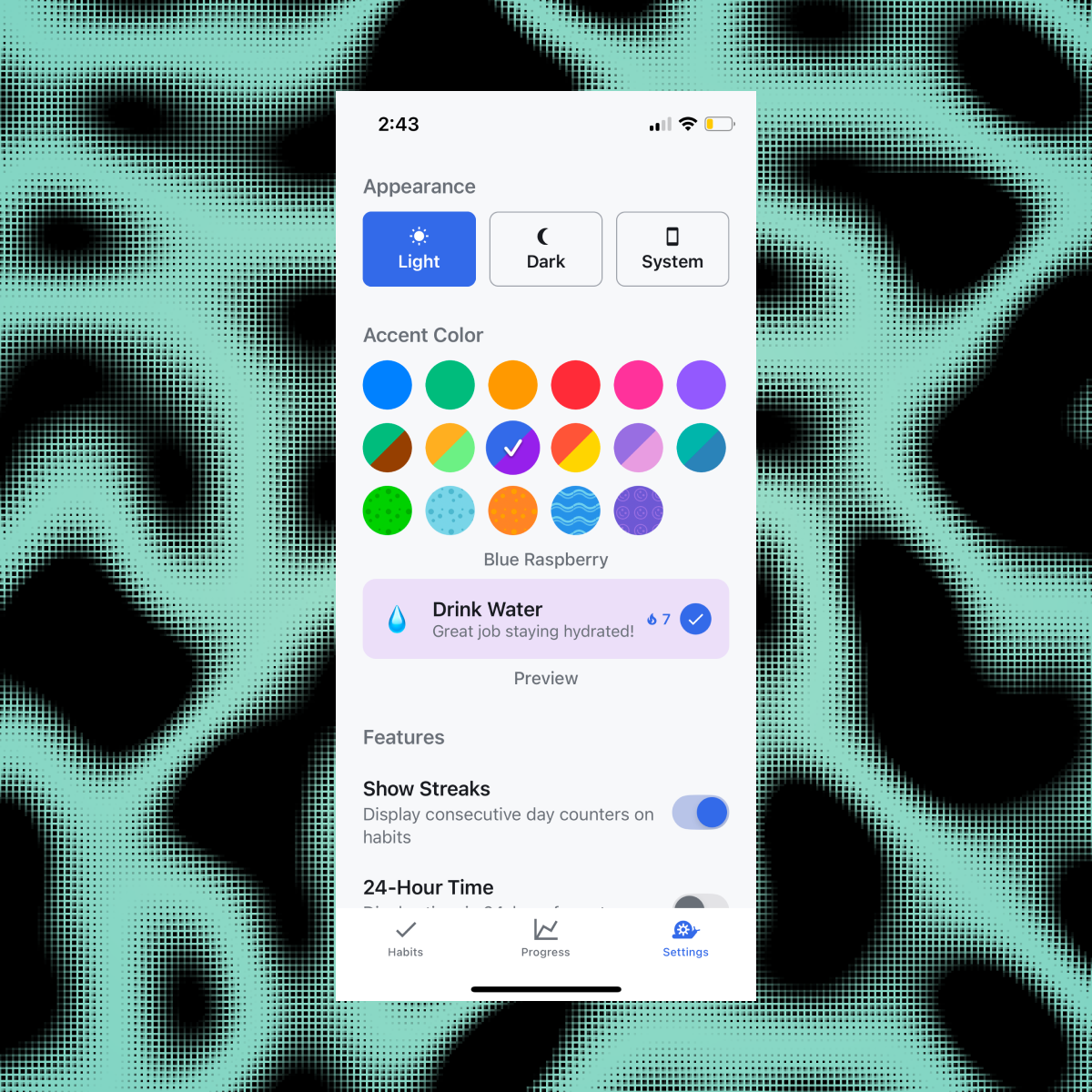
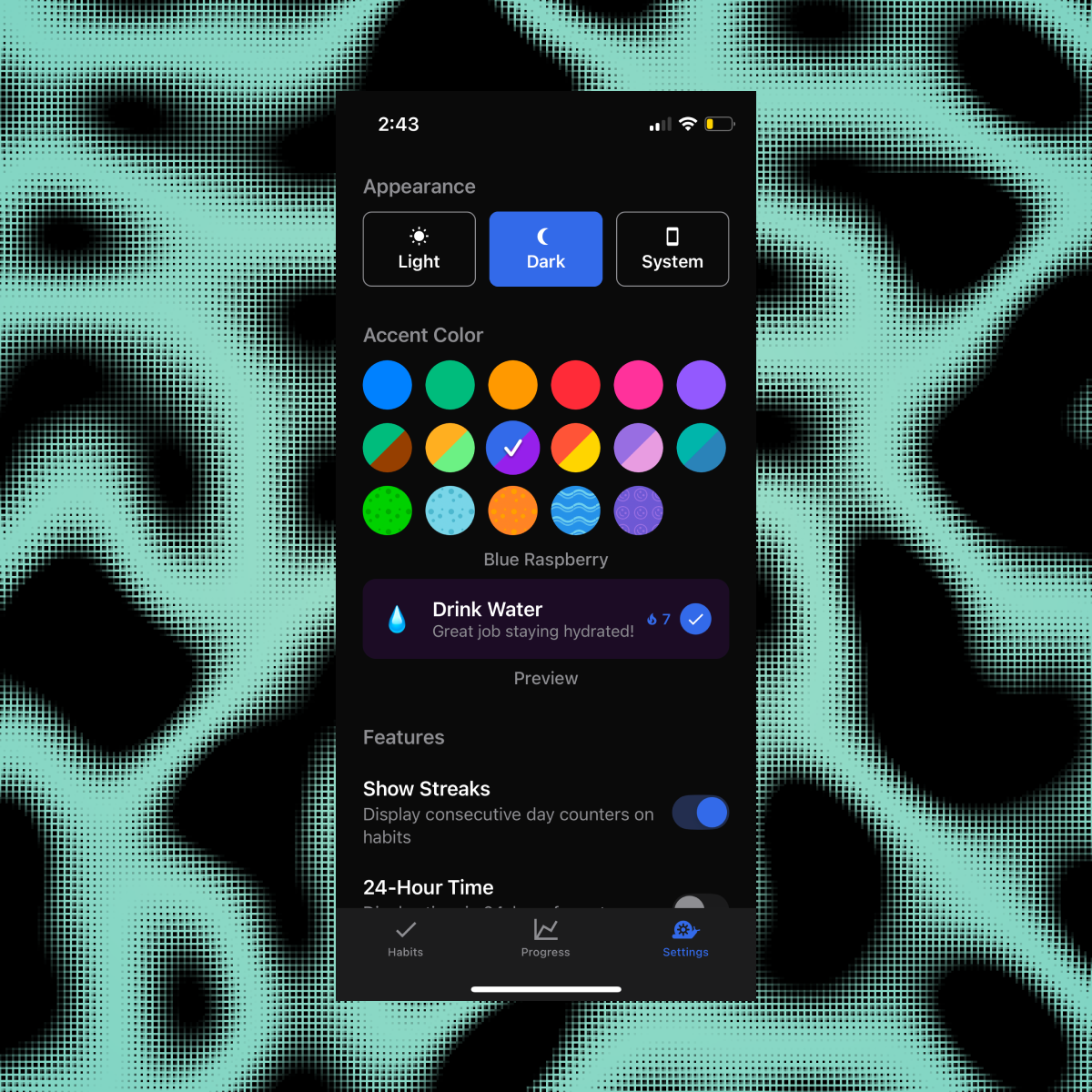
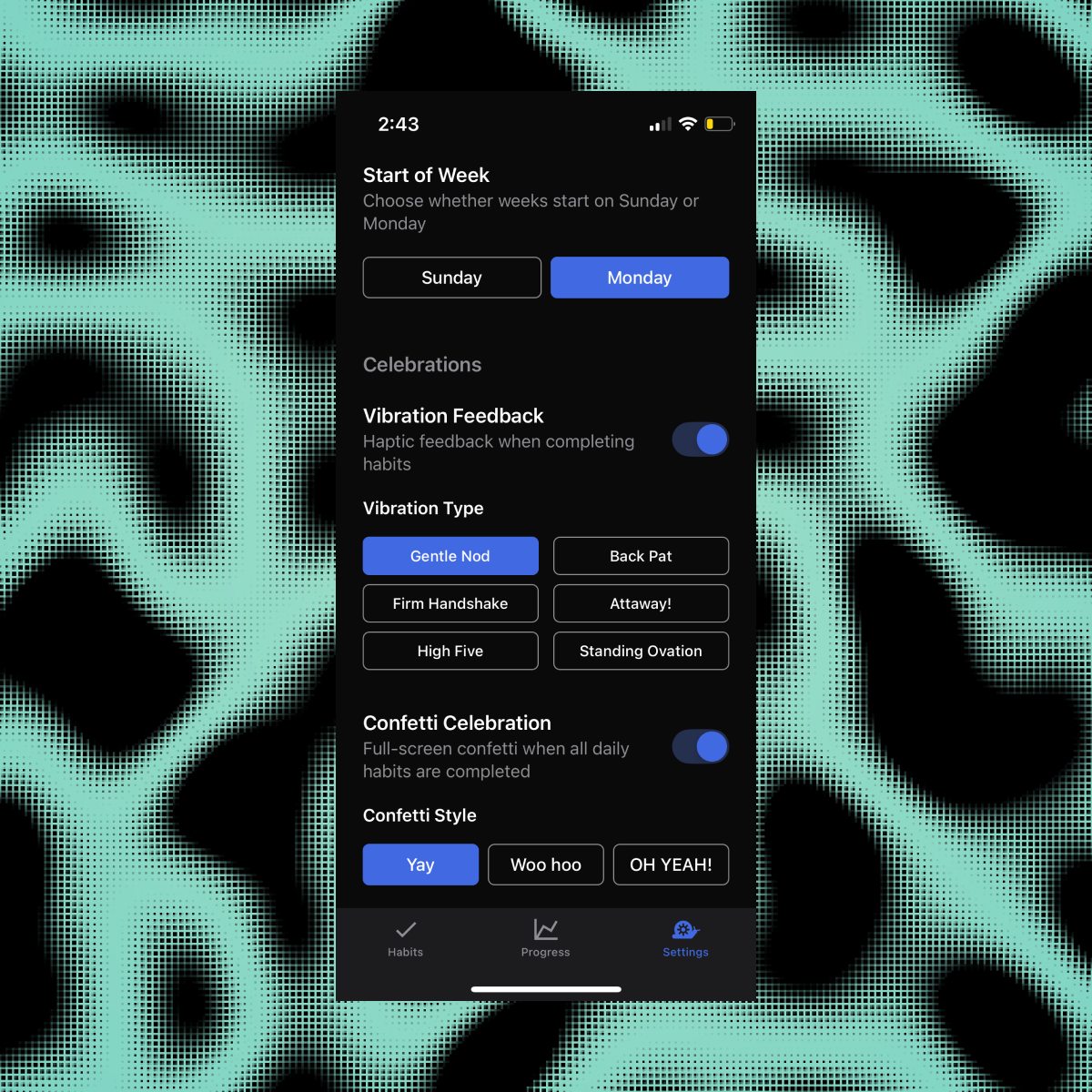
While working on Habit Snail (my habit tracking app), I experienced this flow often. Thinking about what I was doing as I was doing it helped me crystallize my thoughts in ways I hadn’t experienced before with code-heavy projects.
When I talk to friends about this feeling and I liken it another creative practice of mine that I’ve spent thousands of hours doing: drawing. When I draw I spend zero time thinking about how I’m drawing. I can see the full scope of what I’m making and react accordingly. That’s what makes creating feel good, being in conversation with the thing you’re making.
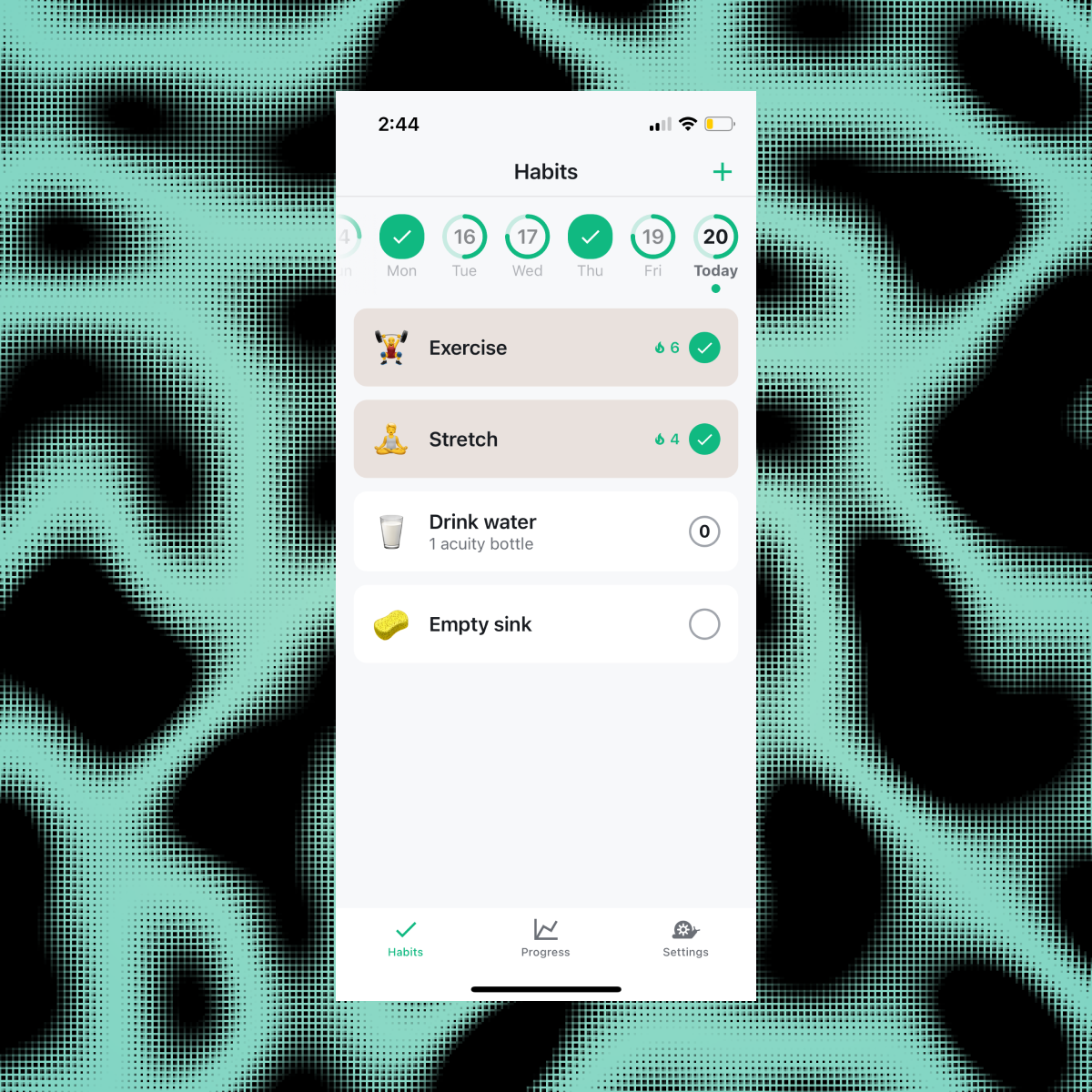
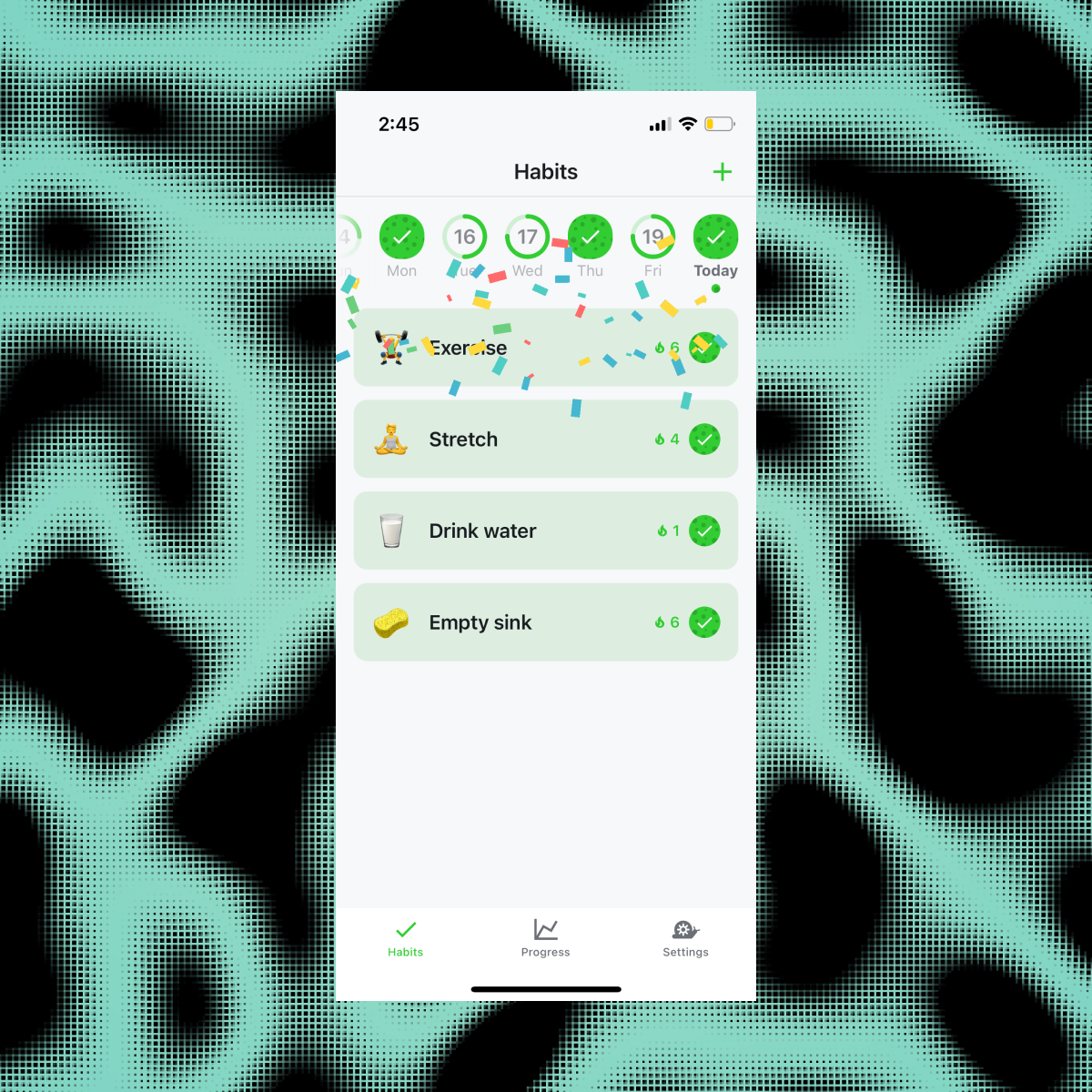
For example, I was working on a way to track daily progress. Each day is represented as a circle along the top of the interface. The outer ring of the date represents the progress of completed habits for that date. So, if you have 4 recurring habits on that day and you’ve completed 3 of them, the circle with be 75% complete.
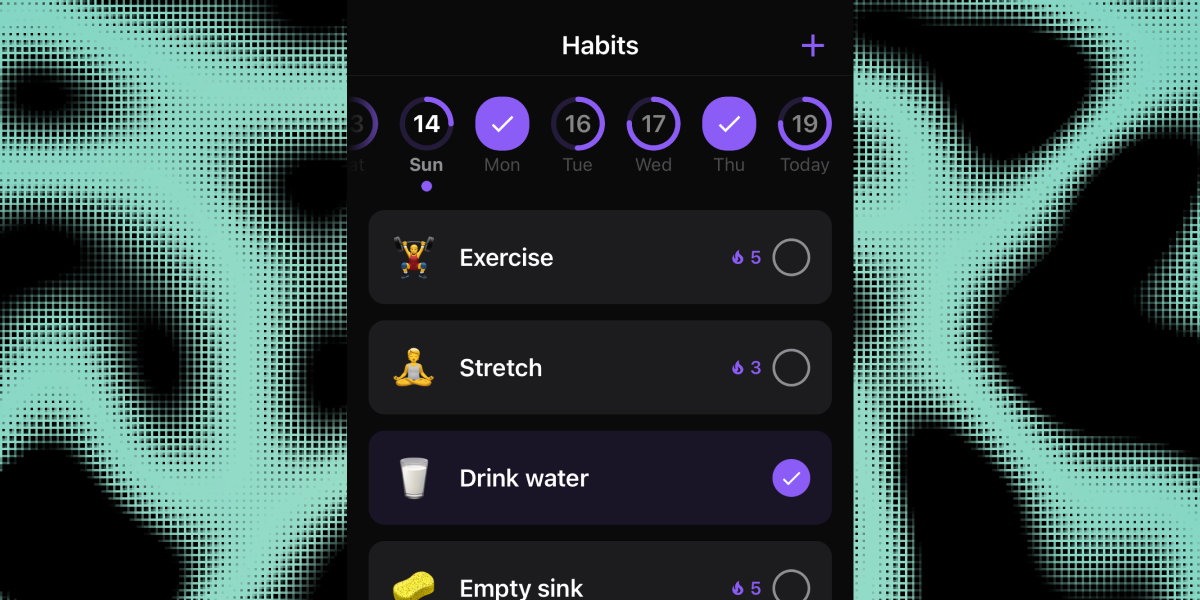
I had actually tried a solution like this before, when I was trying to teach myself Swift, which involved days of troubleshooting and debugging. There are some interesting nuances:
- List should be anchored to the right of the screen, and should overflow to the left
- Scrolling essentially flows backward
- Each day is stateful and needs to be aware of exactly how many habits occur on that date
Handling these nuances was not difficult for the AI. For me though, that'd be different story.
Here's where the magic comes. While developing this, while Claude was doing his thing — I was actively playing with what we were building. I had so many more reps to get familiar with and feel the solution that new ideas came easily. In this case, I was considering how far back you should be able to scroll through previous days in this bar of circles. Inifinite didn't seem right, likely need to be able to show some, then all if need be.
This led to the idea to visulaize the larger "journey" of habits. This screen wouldn't be visible until you've tracked habits long enough for the days to overflow the scroll (roughly 10 or so).
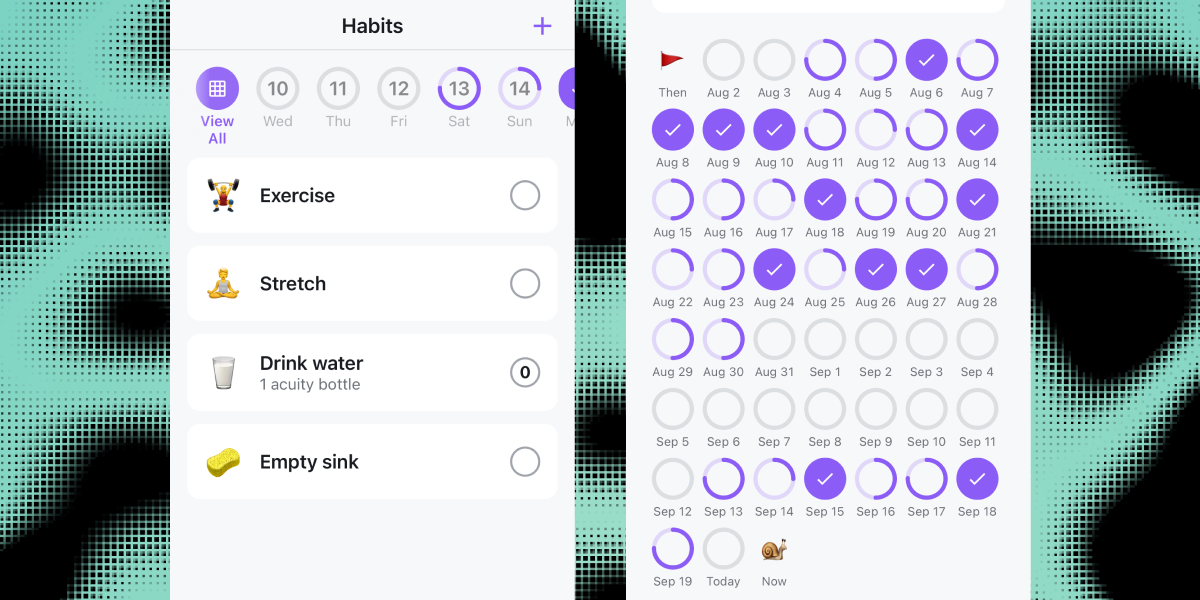
With my old way of working, I'd still be figuring out how to draw a circle.
I released Habit Snail on August 1, 2025. As of September 15, it has been downloaded by 19 people — essentially, nobody. I still use it every day, both as an app and in the way this process has changed how I think.